Chain of Custody, Unbroken: Tracking Samples From Collection to Bench
Look at what a defensible transport record actually contains at each handover, where custody most often breaks down, and how an investigation changes when the timeline already exists.
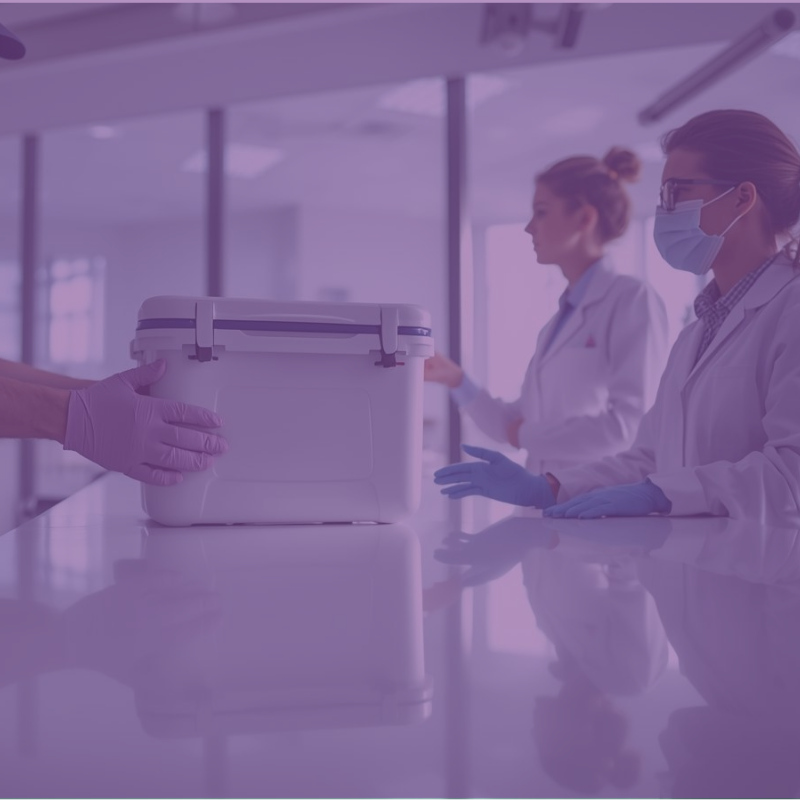
About this webinar
Every handover adds another point to a sample’s chain of custody. When one of those handovers is not consistently recorded, reconstructing the journey later can become difficult.
This session follows a sample journey stage by stage and asks the same two questions at every stop:
Who was responsible for the sample at this point?
What evidence would be available later?
We will look at what a useful custody record should capture at collection, pickup, handover, transit and receipt, where information can become fragmented, and what changes when a delayed, missing or queried sample already has a complete timeline behind it.
This is the second session in our five-part Connected Sample Journey series. The first session explored why visibility can become limited between collection and receipt. This session focuses on how to create a practical, defensible record across that journey.
Who is this for
This is a practical session for the people responsible for maintaining sample traceability and answering questions when a journey cannot be easily reconstructed.
- Laboratory and operations managers overseeing sample flow
- Quality and compliance managers responsible for procedures and evidence
- Anyone responsible for investigating delayed, missing or queried samples
- Teams preparing for an accreditation assessment
Watch the recording
What you'll take away
The difference between knowing where a sample is and knowing who was responsible for it
Location tracking shows where a sample or container has been. A chain-of-custody record adds who held responsibility, when that responsibility changed and what evidence was captured at each point.
What a defensible record should contain at each handover
We will move stage by stage through collection, pickup, handover, transit and receipt, looking at what information supports continuity and what questions can remain when a record captures location alone.
Where continuity can be lost
Gaps can emerge at transition points between people, shifts, systems and organisations. You will learn where to look for these gaps and what evidence can strengthen the record.
How an existing timeline supports an investigation
See how an established timeline can help teams investigate a delayed or missing sample and reconcile discrepancies earlier. For example, identifying that twelve samples left and eleven arrived soon after the handover, rather than discovering the difference at the end of the day.
Why process and adoption come before technology
Technology can support a chain-of-custody process, but it cannot define the process on its own. The approach needs to fit existing workflows, make responsibilities clear and minimise additional steps at each handover. A record only creates value when staff can complete it consistently.
Who you'll hear from

Michael Burton
CEO, BinaryMed
Michael co-founded BinaryMed and works with pathology networks across Australia, the UK and Europe on bringing real-time visibility to the pre-analytical phase, the stage he argues is the most error-prone and least instrumented in diagnostics.

Caitlin Young
Host, BinaryMed
Caitlin works with medical and cold-chain teams across APAC on protecting critical samples and supplies in transit. She joined BinaryTech from Diligent, where she spent nearly seven years in governance and compliance software.
Frequently Asked Questions
Yes, completely. There's no cost and no catch.
No. This session stands on its own. Session 1 made the case that the record stops when a sample is booked in, and we will recap that in a couple of minutes at the start.
45 minutes, including around ten minutes of live Q&A at the end. We finish on time.
This isn't a product demo or a sales pitch. We'll show you real records from a real sample journey, but we won't be walking through features.
A one-page summary of what to record at collection, pickup, handover, transit and receipt, taken directly from the session itself. We'll send it to everyone who registers, whether or not you make it on the day.